Farms & animals
Fish farming: how aquaculture works and what is debated
Key points
- Aquaculture covers plants, shellfish and finfish in different water environments.
- NOAA describes hatcheries, cages and recirculating systems as different methods.
- NOAA combines scientific analysis and public engagement in site-suitability work.
- The salmonid reference reports net-pen exchange, escapes and questions about wild-fish interactions.
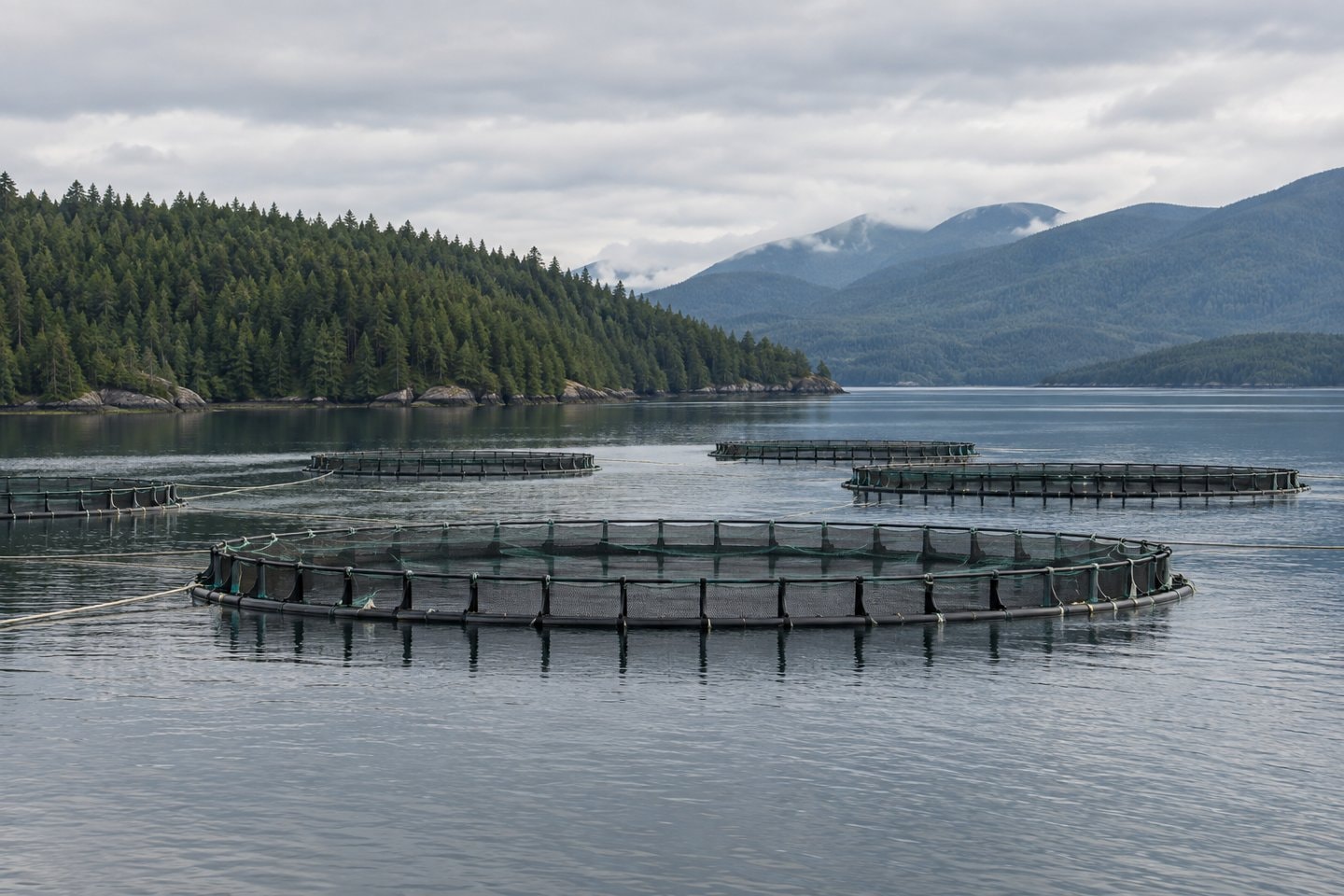
Fish farming is part of a broader practice called aquaculture. The subject includes different species, water environments and production systems, so a discussion of salmon net pens does not describe every aquatic farm. A useful account identifies where an organism is raised, how the system exchanges water with its surroundings and which question is being assessed. Food supply, fish health, wild populations, feed ingredients and discharge are related topics, but they are not interchangeable measures of a farming system.
Freshwater, marine water and the range of aquaculture
Wikipedia's aquaculture article describes controlled cultivation of fish, crustaceans, mollusks, algae and aquatic plants in freshwater, brackish water and saltwater. Marine farming is often called mariculture. The reference distinguishes cultivation from fishing for wild animals, while also describing hatchery-based practices that interact with fisheries.
The same article describes farms on land, in sheltered nearshore water and in more exposed offshore settings. Land facilities can include tanks, ponds and raceways; other systems use cages, racks or bags in open water. These are descriptions of production arrangements, not a judgment about whether a particular site is appropriate. The kind of enclosure and the water environment help define which interactions a source is discussing.
Fish farming is therefore a narrower term than aquaculture. A shellfish farm, an aquatic-plant farm and a fed finfish system raise different organisms and use different methods. The reference's marine-farming section contrasts operator-fed salmon with oysters that filter naturally available food. That distinction matters in a discussion of feed demand: a claim about feed for salmon cannot simply be applied to all aquaculture production.
Hatcheries, net pens and recirculating systems
NOAA Fisheries' explanation of marine aquaculture describes hatcheries as the source of young fish and shellfish for farms and some fisheries. Animals are spawned, hatched and cared for before transfer to a farm or release in a stock-enhancement program. A hatchery stage and a later farming stage can occur in different environments, so the location where an animal begins life does not describe its entire production history.
NOAA's account lists pond culture, cage culture and recirculating systems among the methods used for marine finfish. It describes recirculating systems as filtering and recycling water and waste. It also describes integrated systems in which by-products from one raised species become feed for another. These categories help identify a method before its environmental effects are considered. The agency presents advantages and disadvantages as part of selecting and monitoring a system.
U.S. aquaculture and NOAA's role
The NOAA Fisheries aquaculture topic page describes its work in science, research, federal policy and regulation. It presents marine aquaculture as a complement to commercial and recreational fisheries and emphasizes environmental, social and economic goals. That is the agency's account of its role and objectives, rather than this reference's verdict on every farm or farming method.
The topic page describes regional work involving finfish, shellfish and aquatic plants. It also explains a process for identifying areas potentially suitable for aquaculture, using scientific analysis, spatial information and public engagement. Site selection in that account includes environmental and community considerations. The regulator guide provides the broader agency context, while the page on federal rulemaking explains how public policy processes differ from a scientific study.
Salmon farming and exchanges with open water
Wikipedia's account of salmonid aquaculture describes salmon beginning in freshwater tanks before a marine stage in floating cages or net pens. It explains that net pens are anchored in sheltered coastal locations and that fish receive prepared feed. The article contrasts open net cages with closed or recirculating systems and reports that the open cages do not form an effective barrier to wastes, parasites or disease entering surrounding water.
The enclosure is central to the environmental questions described by that source. Water moving through a pen is part of the farming arrangement, but the same exchange connects the pen to its surrounding ecosystem. The reference reports that farmed fish can escape, including during storms. It describes possible competition with wild species when escaped fish are non-native, and possible interbreeding when they are native. These are reported pathways and concerns, not a statement that every escape has the same outcome.
Fish health, feed and pollution questions
The salmonid reference discusses infectious disease and parasites, including sea lice, within farmed and wild populations. It summarizes studies that have reported connections between farms and changes in wild salmon, and also describes disagreement about the interpretation of those connections. The distinction between a correlation and a causal explanation belongs with that account. A result for a particular location and population cannot be treated as a description of every coastal system.
Feed is another subject in the references. The general aquaculture article describes the use of wild-fish ingredients for some fish that eat other fish, along with development of plant- and insect-based alternatives. The salmonid article discusses fish meal and other feed ingredients. The question is about what a species receives as feed and where those ingredients originate. It is separate from the enclosure question, even though both can be discussed under the broad heading of aquaculture.
The salmonid article also describes siting and water exchange as part of pollution questions, including the movement of wastes and conditions near the seafloor. Its descriptions belong to specified systems and locations. NOAA emphasizes monitoring and management in its U.S. account. This reference presents both the agency's framing and the environmental questions summarized in the reference material, without turning the comparison into advice about which seafood to eat.
The engineered-salmon page concerns a specific genomic-alteration review, which differs from aquaculture as a general method. The antimicrobial-resistance page explains another animal-production issue. These connections keep the farming system, the organism's characteristics and the regulatory question separate enough to assess what a source actually reports.