Land, water & climate
Food, farming and climate
Key points
- EPA organizes its emissions inventory by source, gas and economic sector.
- The agricultural reference describes livestock digestion, soils and manure as distinct emission processes.
- The IPCC land assessment connects climate with food, water, livelihoods and land use.
- The FAO-report reference describes debate about calculation boundaries and comparisons.
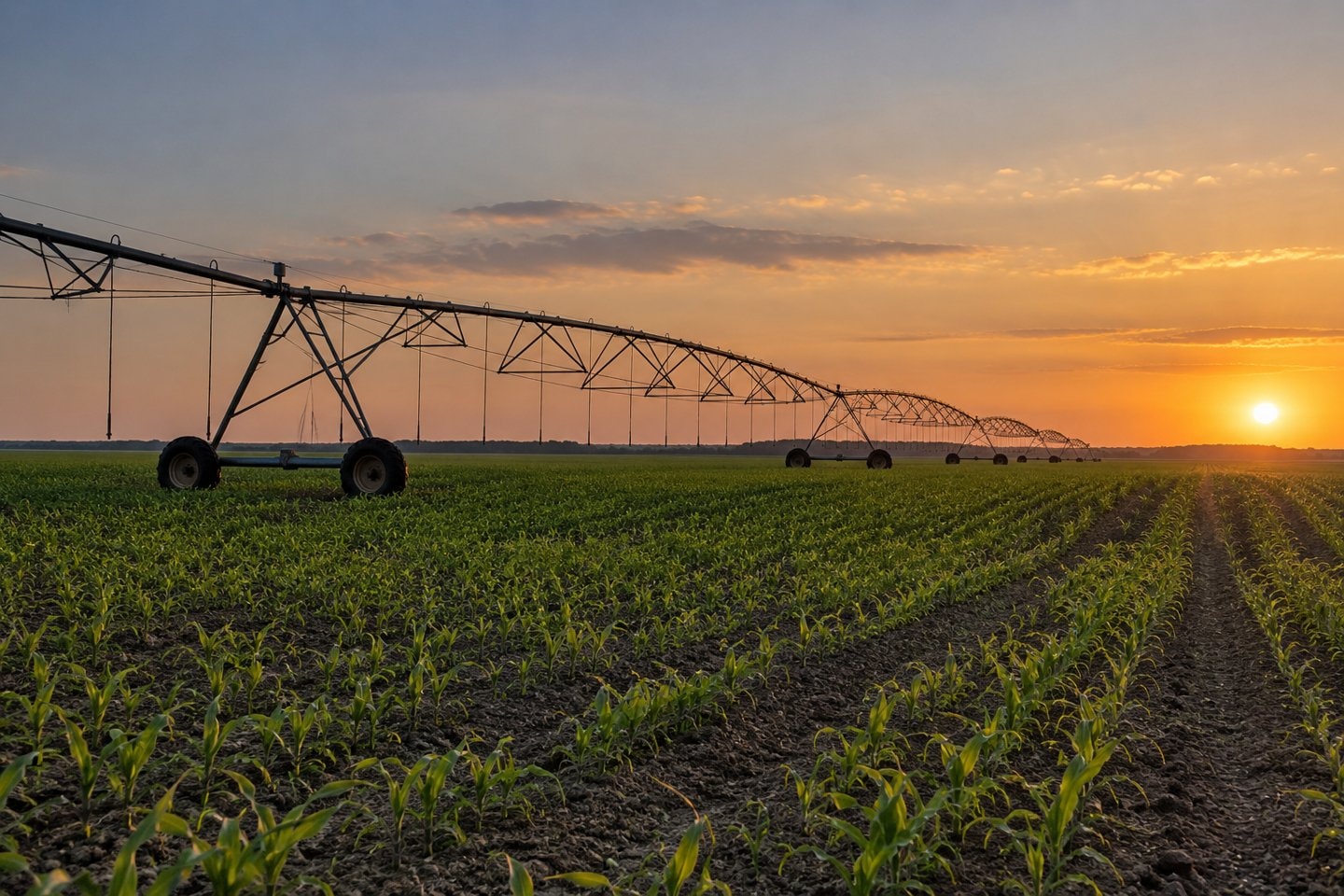
Food and farming enter climate discussions through several kinds of accounting. A national sector inventory asks where emissions arise within a country. A study of a food's production chain can also include feed, land-use change, processing and transport. A share calculated with one boundary cannot automatically be read as a share calculated with another. Understanding the boundary, the gases included and the geographical scope is part of understanding a climate figure.
What an emissions inventory counts
The EPA's page on U.S. greenhouse-gas sources describes its national inventory as estimating emissions and removals associated with human activities by source, gas and economic sector. It identifies livestock, agricultural soils and rice production within agriculture. It also separates direct emissions from indirect emissions associated with electricity use. These are features of the agency's accounting framework, not a measurement of every activity connected with food.
EPA explains that assigning electricity emissions to the sectors using the electricity changes their reported sector shares. Its page also distinguishes emissions sources from land that acts as a sink, absorbing more carbon dioxide than it emits. A sector comparison therefore depends on how categories are assigned and whether removals are shown. An agriculture category and an entire food system need not have the same boundary.
The agency explains carbon dioxide equivalent as a way of expressing different gases on a common basis using their global warming potential. The unit permits comparison within a specified accounting method; it does not make the gases chemically identical. The method and time basis remain part of the meaning of a reported total. Comparisons need to identify that basis alongside the activity or sector being compared.
Livestock methane, soils and manure
Wikipedia's account of agricultural greenhouse-gas emissions describes methane from enteric fermentation in ruminant animals, nitrous oxide associated with fertilizer and soils, and methane and nitrous oxide from manure. Enteric fermentation is the digestive process discussed in that livestock account. The reference also includes rice cultivation, fossil-fuel consumption and land conversion in its descriptions of agricultural emissions.
The categories describe processes at different points in production. Livestock digestion is not the same activity as storing or applying manure. Producing fertilizer is distinct from applying it to soil, and changing land use is distinct from continuing production on existing farmland. The reference discusses all of these, while the national inventory organizes activities under its own sector rules. Keeping those categories visible prevents a statement about one process from becoming a claim about an entire farming method.
The agriculture reference describes soil emissions as depending on soil type, climate and management. It also separates direct farming emissions from indirect land-conversion effects. These descriptions provide reasons to examine the location and system behind a result. They do not supply a single emissions value applicable to every field, herd or region. This reference reports the source's categories without using them to recommend a diet or rank particular food choices.
The IPCC land report's broader framing
The IPCC Special Report on Climate Change and Land frames land as the basis for food, freshwater, livelihoods and other ecosystem services. Its chapter summaries discuss both emissions from land use and carbon uptake by land ecosystems. The report describes land-management and climate questions together with food security, access to resources and governance. That scope is broader than a farm's direct emissions alone.
The report uses stated confidence levels for its findings. Its framing distinguishes regions and land-management systems, and explains that social and economic conditions affect the capacity to respond. It also discusses competition among different uses of a finite land area. These are reported features of the assessment, rather than this site's prediction of what any community will experience or a recommendation about how an individual should eat.
The FAO report and debate over its figures
Wikipedia's account of the FAO report Livestock's Long Shadow records that the report issued in 2006 estimated livestock at 18% of anthropogenic greenhouse-gas emissions and that a 2013 FAO study revised the estimate to 14.5%. The reference describes the earlier report as a research assessment using a life-cycle approach. Its account includes feed production, land-use change, animal production, manure, processing and transport.
The same reference reports disagreement about the figures. Some critics argued that the report underestimated livestock's contribution by leaving out additional processes or land-use considerations. It also describes a methodological objection to comparing comprehensive livestock life-cycle accounting with transportation figures based on vehicle tailpipes. Those are arguments about what belongs within a calculation and whether comparisons use matching boundaries. The reference does not resolve them by selecting a preferred estimate.
A change in an estimate and a disagreement over its boundary are different parts of the discussion. The reported figures identify particular assessments, not a timeless proportion assigned to livestock. They should remain attached to the report, scope and approach described by their source. A national agriculture sector, global livestock production and the entire food system also name different subjects; their percentages cannot be exchanged without explaining what has changed.
Connecting the climate question to other farm topics
The aquaculture page identifies different water-based production systems. The biosolids page explains a separate land-application and pollutant-assessment question. The evidence guide describes why an assessment's scope and assumptions matter. These connections help readers identify which process, comparison and policy question a climate source is addressing, while keeping the source's conclusion attributed.