Farms & animals
Mad cow disease (BSE) and the feed rules that followed
Key points
- The BSE reference describes a cattle prion disease.
- FDA identifies rendered cattle-origin proteins in feed as a route of spread.
- The FDA feed rules distinguish ruminant-feed ingredients from cattle tissues prohibited more broadly.
- The reference distinguishes variant CJD in people from the cattle disease.
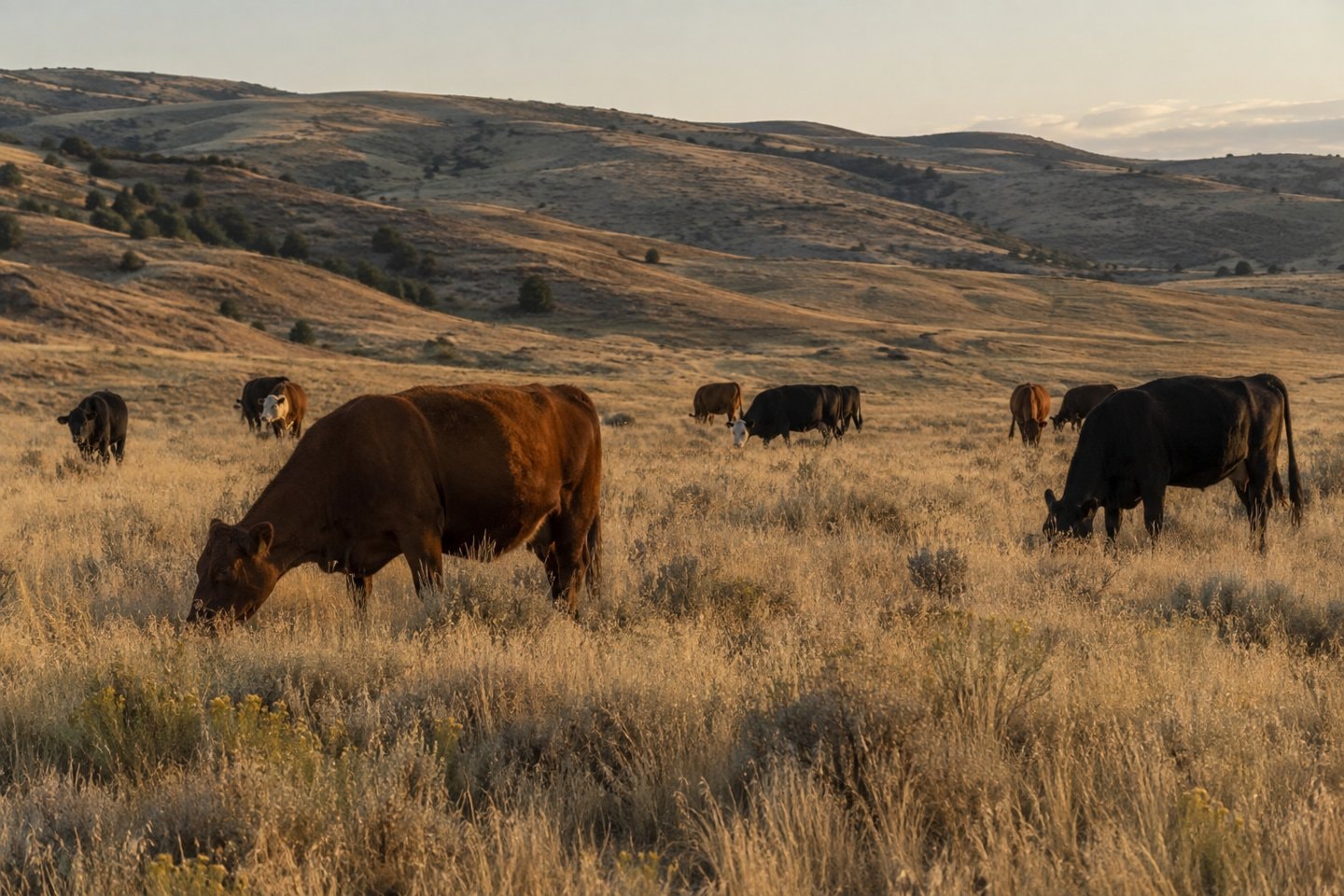
Mad cow disease is the common name for bovine spongiform encephalopathy, shortened to BSE. The food-policy history involves a cattle disease, a route through animal feed and restrictions on materials used in feed. The human disease discussed alongside it is variant Creutzfeldt–Jakob disease, or vCJD. Keeping the cattle disease, the human disease and the regulatory response distinct makes the sequence easier to understand. This account concerns agency rules and reference descriptions, rather than diagnosis or advice about an individual's health.
A prion disease, rather than an ordinary bacterial infection
Wikipedia's BSE article describes a disease of cattle involving a misfolded protein called a prion. It explains that the abnormal protein can induce other proteins to take on the altered form. Its account describes degeneration in the brain and classifies BSE within the transmissible spongiform encephalopathies. The term spongiform refers to the sponge-like changes described in affected brain tissue.
The same article describes classic and atypical forms of BSE. It also explains that signs in cattle are not apparent immediately after infection. The FDA likewise describes a long incubation period with no visible indication of disease during that period. This is part of the reason that a policy history includes feed controls and surveillance, rather than treating the appearance of an animal as a complete account of the disease's presence.
The reference distinguishes the scientific question of how prions behave from the practical question of how exposure occurred in livestock production. A mechanism within tissue and a route through an agricultural system are different levels of explanation. The account of misfolding concerns the first; the feed history concerns the second. Neither description alone supplies the complete history of the epidemic or the full scope of the rules that followed.
Rendered feed and the U.K. epidemic
The BSE article describes cattle being fed meat-and-bone meal containing animal remains and identifies this practice in the spread of the U.K. outbreak. The FDA's account similarly identifies rendered proteins of cattle origin used as feed ingredients as a route of spread. Here rendered feed refers to animal-origin material processed into feed ingredients. The policy concern in these accounts was not simply the presence of protein in cattle feed, but the movement of material that could contain the disease agent.
The U.K. epidemic made the relationship between livestock feed and food policy a central issue in the sources' descriptions. The reference also discusses removal of specified cattle tissues from relevant food and feed channels. Such a tissue restriction and a restriction on the species of animal protein allowed in feed are related measures, but they are not the same rule. One identifies particular materials; the other defines a broader boundary for feed ingredients.
The U.S. feed restrictions
The FDA's BSE page records a 1997 rule prohibiting most mammalian protein in ruminant feed and a 2008 strengthening that prohibited the highest-risk cattle tissues in all animal feed. The agency names cows, sheep and goats as examples of ruminants. Its explanation distinguishes the first rule's feed-recipient category from the broader coverage of the later tissue restriction.
The FDA says the mammalian-protein rule does not prohibit those ingredients in feed for non-ruminants. It requires process and control systems to prevent that use from contaminating ruminant feed during manufacture or transport. In other words, the rule concerns the intended feed recipe and the movement of ingredients through production. A permitted ingredient in one feed category still has to be kept from another category where it is restricted.
The strengthened restriction identifies certain brain and spinal-cord material and certain carcasses that have not been inspected and passed for human consumption. The FDA's description includes qualifications about the cattle's age and removal of those tissues. The details show why a statement such as an animal-protein ban can be incomplete: the rules have ingredient categories, animal categories, tissue categories and defined exceptions. This reference describes their purpose and structure without offering feed-manufacturing instructions.
Cases in the United States
The FDA records the first U.S. detection in 2003 in a cow imported from Canada, with the typical strain associated with the U.K. outbreak. It reports subsequent detections in U.S.-born cattle for which laboratory evidence suggested atypical strains. Those distinctions concern origin and laboratory classification. They do not make every detected case an instance of the same epidemic pattern.
A detected case, a strain classification and a national feed-control policy answer different questions. A case identifies an animal in surveillance records. Classification describes the disease form. The rule defines controls applied across feed production. The source accounts are useful when read at those separate levels, keeping the facts about a particular detection from turning into an unsupported generalization about the whole food supply.
Variant CJD and the food-policy connection
Wikipedia's variant-CJD article describes a human prion disease and reports consumption of BSE-contaminated beef as the primary believed route of spread. It distinguishes vCJD from typical Creutzfeldt–Jakob disease, although both involve prions. The reference also describes uncertainty about the interval between exposure and development of the disease. These are source descriptions of the disease relationship, not an assessment of a reader's personal exposure.
The page on foodborne illness places prions beside the other hazard categories identified by agencies. The Food Safety Modernization Act page explains preventive thinking elsewhere in food regulation. The page on who regulates food describes agency responsibilities. Together, these topics show how controls can operate earlier in a production chain than the finished food, while keeping BSE's specific feed history identifiable.