Engineered foods
Engineered fish: the AquAdvantage salmon decision
Key points
- The salmon carries genetic information affecting year-round growth.
- The FDA decision concerned a specific animal application.
- The reported containment design combines land-based facilities and biological measures.
- Food review, import restrictions and labeling were separate parts of the history.
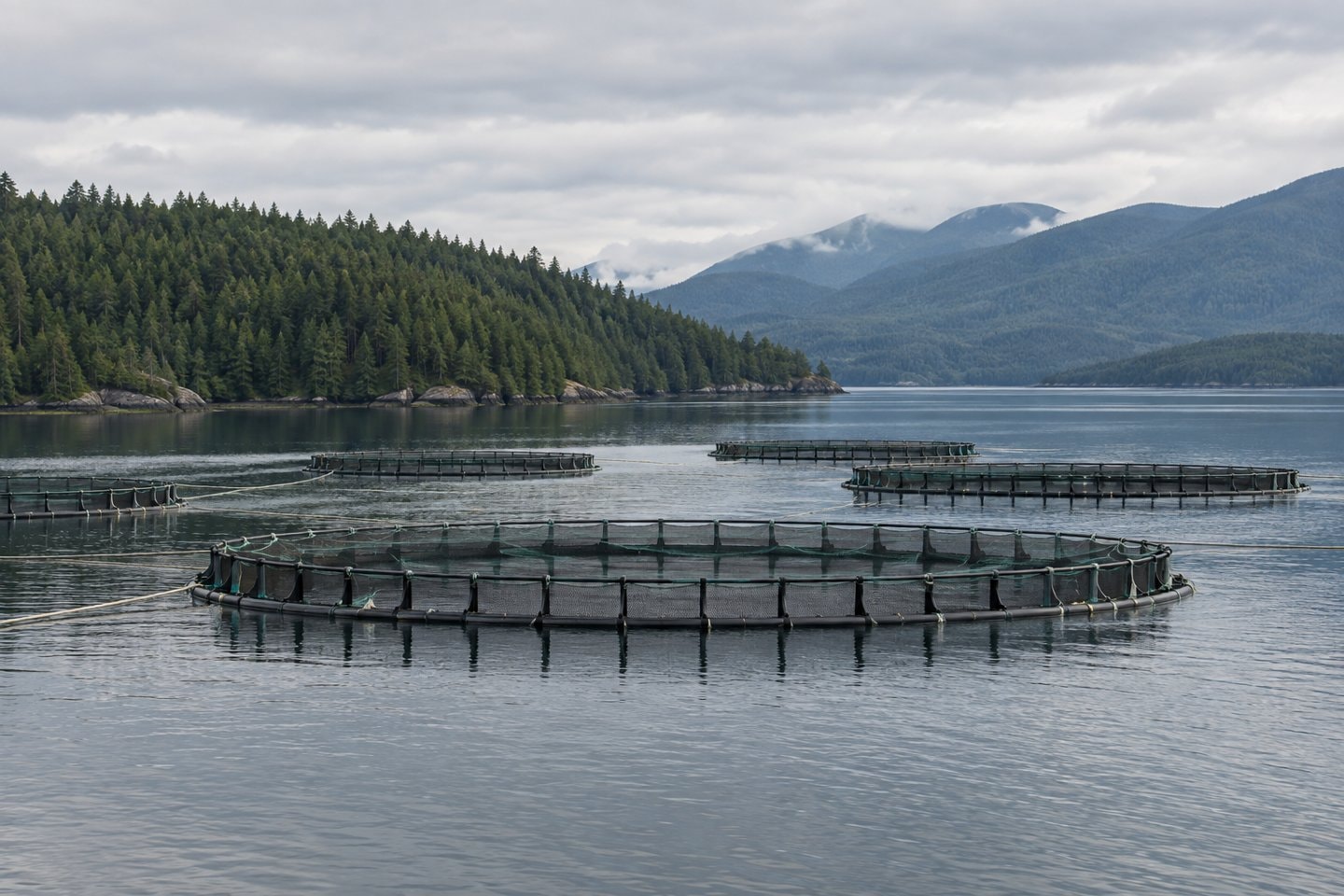
The engineered-salmon decision joins questions about an animal's genetic alteration, the food produced from it and the conditions under which it is raised. AquAdvantage salmon is an Atlantic salmon with a change intended to affect growth. Its regulatory history is useful because authorization, environmental review, containment and labeling each formed a distinct part of the record. The approval of a particular application does not describe every possible engineered fish or every form of fish farming.
The alteration and its purpose
Wikipedia's AquAdvantage salmon article dates development to 1989 and describes genetic information from Chinook salmon together with a promoter sequence from ocean pout. A promoter controls the activity of associated genetic information. In this fish, the sequence enables growth-hormone expression throughout the year rather than only during seasonal growth. The article describes the aim as reaching market size sooner, rather than changing the fish's ultimate size.
The fish remains an Atlantic salmon in the account. Genetic engineering changes a specified part of the inherited information rather than turning the animal into the species that supplied a sequence. The article also notes that selective breeding had already changed growth rates in conventionally farmed Atlantic salmon. The engineered alteration and the effects of ordinary breeding are therefore different parts of the development history.
An intentional genomic alteration is a planned change in an animal's genetic material. In this example, the regulatory question concerned the particular DNA change in the salmon and the animal produced with it. The general crop-food review described in engineered foods and their reviews provides useful background, but the salmon decision proceeded through an animal application rather than the voluntary plant-food consultation.
The FDA application and food review
The FDA's AquAdvantage salmon page records approval of a new animal drug application in November 2015. It identifies the fish as genetically engineered Atlantic salmon and provides headings for the approval materials, environmental assessments and responses to public comments. The regulatory pathway is part of the approval's legal form; it does not mean that a food product is being presented as a medicine for consumers.
Wikipedia's account describes a food review that considered fish allergens and the composition of edible tissues. It reports that the FDA required information about changes in the kinds or levels of allergens. The article reports the FDA's conclusion that the approved salmon presented no significant food-safety hazards relative to conventional Atlantic salmon. That is the agency's reported conclusion about this application and its evidence, rather than a general conclusion about engineering fish.
The article also states that the FDA expected people allergic to Atlantic salmon to be allergic to this salmon because of their shared species properties. This is reported as the agency's assessment, not as an individual dietary recommendation. The distinction matters because assessment of a changed food does not imply that a familiar property of its conventional counterpart has disappeared.
Containment as a condition of production
Wikipedia's account of containment requirements reports that the application specified land-based tanks with no ocean involvement and that the FDA required precautions to prevent mixing with wild salmon. It describes all-female, sterile production fish, secure land-based egg-production facilities and movement of eggs to a land-based growing facility. These conditions address the possibility of release through both the production setting and the reproductive characteristics of the fish.
The article explains triploidy as the presence of an additional set of chromosomes in production fish. Its account describes pressure treatment of eggs to induce that condition and reduce the possibility of reproduction. The use of female fish and the use of triploidy are biological measures, while land-based tanks and secure facilities are physical measures. They are different elements of the containment design rather than alternative descriptions of the same barrier.
Critics' environmental concerns, as the same article summarizes them, focus on escape, interbreeding and competition with wild fish. The article describes modeled invasion scenarios in semi-natural settings that suggested engineered salmon could out-compete conventional fish. A modeled scenario is part of evaluating a possible release; it is not a report that the approved production fish established themselves in a wild population.
Environmental review therefore depends on the organism and its proposed setting together. A concern about what could happen after escape and a condition intended to prevent escape answer connected questions. The record is clearer when a statement identifies which part of that chain it addresses. The wider discussion of net pens, freshwater systems and marine production appears in fish farming and aquaculture.
Approval, import restrictions and labels
Wikipedia's regulatory history reports that an import restriction followed the 2015 approval amid demands for labeling, and that the FDA deactivated the import alert on March 8, 2019. The article describes earlier advisory review, an environmental assessment and requests that the engineered origin be identified to consumers. These stages show why a food-review conclusion, permission to import production material and a label requirement must be tracked separately.
The labeling dispute concerned information available to consumers, while the import alert concerned material entering the country. Those issues did not replace the underlying review of the altered animal. The page on bioengineered-food disclosure explains the national system for information on foods covered by its definition. It also distinguishes a production-method disclosure from a food-composition assessment.
The salmon example can be read as a sequence of specific decisions with defined evidence and conditions. Its history includes arguments about the review process as well as the food and environment questions. Reading food-risk claims explains how a hazard, an exposure pathway and uncertainty play different roles in assessing a scenario. Keeping those roles separate allows agency conclusions and critics' concerns to be described without converting either into the reference's own verdict.